

ISO 27001:2022 – Information Security Management System (ISMS)
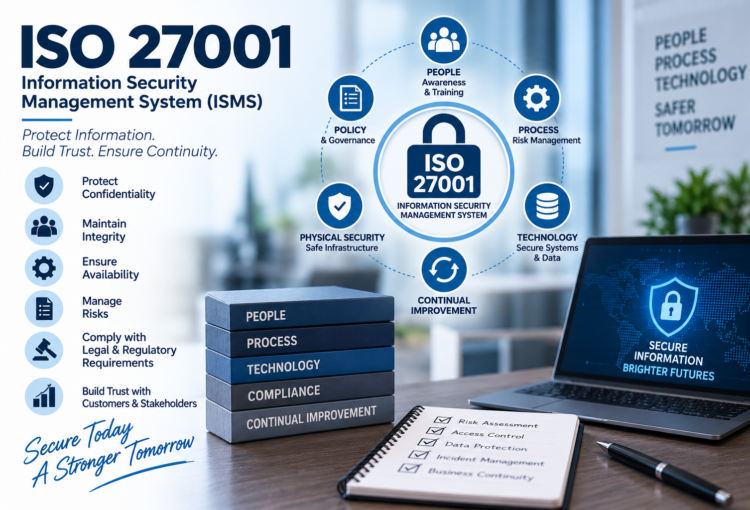 ISO 27001 Certification in India helps organizations strengthen their information security management systems and protect sensitive business information. In today’s rapidly evolving digital landscape, information security has become more than just a technical requirement—it is a strategic business imperative. ISO 27001:2022 introduces eleven new controls and restructures existing frameworks to address cutting-edge cybersecurity issues, marking a significant shift in information security management requirements.
Organizations transitioning from ISO 27001:2013 should plan their transition to ISO 27001:2022 based on their certification and audit timelines. At QCM, we understand that successful ISO 27001:2022 implementation requires a structured, risk-based approach that aligns with an organization’s business objectives and information security requirements.
Understanding the Key Changes in ISO 27001:2022
The most recent version introduces important changes that reflect the current cybersecurity landscape:
Structural Enhancements
- Streamlined Controls: Number of controls reduced from 114 to 93, with streamlined and merged requirements
- Four Control Categories: Organizational, People, Physical, and Technological
- Better Alignment: Enhanced integration with various control system requirements
New Security Controls
The eleven new controls address significant current threats:
A.5.7 – Threat Intelligence: Structured evaluation for early threat detection
A.5.23 – Information Security for Cloud Services: Specific requirements for cloud and hybrid environments
A.5.30 – ICT Readiness for Business Continuity: IT continuity during emergencies
A.7.4 – Physical Security Monitoring: Enhanced physical security monitoring capabilities
A.8.9 – Configuration Management: Standardized configuration controls
A.8.11 – Data Masking: Protecting sensitive data in non-production environments
A.8.12 – Data Leakage Prevention: Advanced safeguards to prevent unauthorized data flow
A.8.16 – Monitoring Activities: Comprehensive monitoring requirements
A.8.23 – Web Filtering: Controlled internet access and URL filtering
A.8.28 – Secure Coding: Software development security requirements
Phase 1: Assessment and Planning
Strategic Implementation Approach
Gap Analysis
Organizations must conduct thorough assessments against the new standard:
- Compare current ISMS to ISO 27001:2022 requirements
- Identify implementation gaps in the eleven new controls
- Assess organizational readiness for enhanced cloud security
- Review existing threat management strategies
Scope Definition
Clearly defining the ISMS scope ensures targeted implementation efforts:
- Determine which processes, locations, and organizational units will be covered
- Identify information assets requiring protection
- Establish boundaries for threat assessment and implementation
- Align scope with business objectives and regulatory requirements
Phase 2: Risk Assessment and Treatment
Enhanced Risk Management
ISO 27001:2022 emphasizes established approaches to threat assessment:
- Asset Identification: Comprehensive inventory of assets
- Threat Assessment: Leveraging the new threat intelligence control requirements
- Vulnerability Assessment: Systematic evaluation of security weaknesses
- Risk Analysis: Using both quantitative and qualitative approaches
Control Selection and Implementation
The streamlined control framework requires strategic selection:
- Mandatory Controls: Implementing all applicable Annex A controls
- Additional Controls: Selecting supplementary measures based on risk assessment
- Cloud-Specific Controls: Addressing new cloud security requirements
- Integration Considerations: Ensuring compatibility with existing CMMI processes
Phase 3: Documentation and Training
Policy Development
Comprehensive documentation ensures consistent implementation:
- Information Security Policy: Top-level organizational commitment
- Risk Management Procedures: Detailed implementation roadmap
- Work Instructions and Procedures: Operational guidance for staff
- Records and Evidence: Audit trail for compliance demonstration
Organizational Awareness
Effective training programs build security culture:
- Leadership Awareness: Executive understanding of ISMS requirements
- Staff Training: Specific security responsibilities
- Incident Response Procedures: Clear escalation and response protocols
- Continuous Improvement Mindset: Embedding security into organizational DNA
Benefits of ISO 27001 Certification in India
Enhanced Security Posture
The updated standard provides robust protection against modern threats:
- Proactive Threat Management: Early detection through threat intelligence
- Cloud Security Assurance: Specific controls for digital transformation
- Regulatory Compliance: Meeting evolving legal requirements
- Business Continuity: Enhanced cyber incident resilience
Competitive Advantages
ISO 27001:2022 certification delivers measurable business benefits:
- Customer Trust: Demonstrated commitment to data protection
- Market Differentiation: Competitive advantage in regulated industries
- Risk Reduction: Lower probability of security incidents and associated costs
- Operational Efficiency: Streamlined security processes and procedures
CMMI Framework Compatibility
For organizations implementing multiple management systems, ISO 9001 Certification can complement ISO 27001:2022 by strengthening quality management alongside information security. ISO 27001:2022 can offer complementary benefits:
- Process Maturity: Enhanced security within established process frameworks
- Quality Integration: Security controls integrated with quality management
- Continuous Improvement: Aligned with CMMI’s focus on organizational maturity
- Stakeholder Confidence: Dual certification demonstrates comprehensive excellence
Implementation Challenges and Solutions
Common Implementation Obstacles
Resource Constraints
- Challenge: Limited budget and personnel for implementation
- Solution: Phased implementation approach with prioritized control deployment
- HTCL Advantage: Leveraging Elite CMMI expertise to optimize resource allocation
Technical Complexity
- Challenge: Understanding and implementing new cloud security controls
- Solution: Expert consultation and structured training programs
- HTCL Advantage: Combining process improvement methodologies with technical expertise
Organizational Resistance
- Challenge: Employee resistance to new security procedures and requirements
- Solution: Comprehensive change management and stakeholder engagement
- CMMI Integration: Utilizing established process improvement frameworks
Future-Proofing Your Information Security Management
Emerging Trends and Considerations
The cybersecurity landscape continues evolving rapidly:
- Artificial Intelligence Integration: AI-powered threat detection and response capabilities
- Zero Trust Architecture: Moving beyond perimeter-based security models
- Quantum-Resistant Cryptography: Preparing for future computational threats
- Supply Chain Security: Increased focus on third-party risk management
Continuous Improvement Framework
Successful ISMS implementation requires ongoing enhancement:
- Regular Risk Assessments: Quarterly review of threat landscape changes
- Control Effectiveness Monitoring: Continuous measurement of security performance
- Technology Adaptation: Integration of emerging security technologies
- Stakeholder Feedback: Regular review of business and regulatory requirements
Conclusion: Achieving Excellence Through Strategic Implementation
Implementing ISO 27001:2022 represents more than regulatory compliance—it’s an investment in organizational resilience and competitive advantage. The latest standard’s focus on modern threats, cloud security, and structured risk management aligns perfectly with contemporary business needs.
At QCM Certifications, we help organizations implement ISO 27001:2022 using a structured approach focused on information security, risk management, and continuous improvement. Our integrated approach combines proven methodologies with technical expertise, ensuring not only certification success but also long-term security excellence.
The transition deadline of October 2025 creates urgency for organizations still operating under the 2013 standard. However, this timeline also presents an opportunity for strategic security enhancement that delivers lasting business value.
With proper planning, expert guidance, and commitment to continuous improvement, organizations that approach ISO 27001:2022 implementation strategically will be well-positioned to address evolving cybersecurity challenges while maintaining operational excellence and stakeholder trust. Choosing ISO 27001 Certification in India helps organizations strengthen information security, improve risk management, and build greater trust with customers and stakeholders.