

ISO 22000 Certification in India
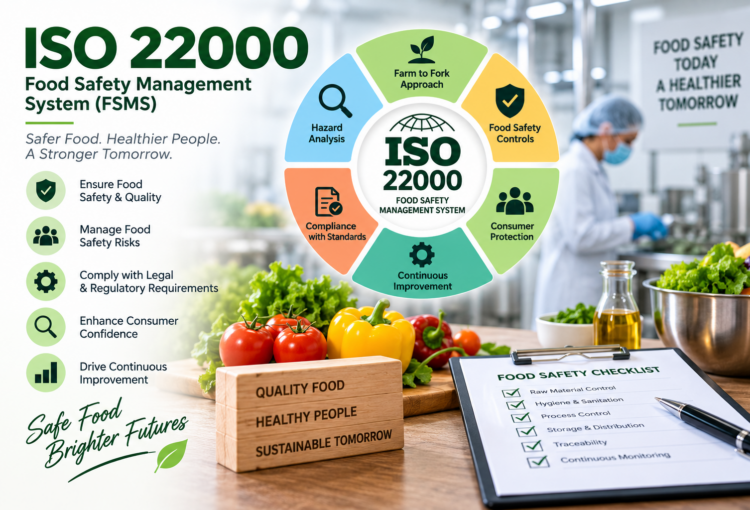 ISO 22000 Certification in India helps organizations in the food chain establish and maintain an effective Food Safety Management System (FSMS). ISO 22000 provides requirements for managing food safety hazards and ensuring that food safety is maintained throughout the food chain. It supports organizations in identifying hazards, implementing appropriate controls, and continually improving their food safety management processes.
ISO 22000 Certification demonstrates an organization’s ability to control food safety hazards and maintain food safety throughout relevant stages of the food chain. The standard combines key principles of food safety management with the HACCP approach to provide a framework for developing, implementing, maintaining, and continually improving a Food Safety Management System (FSMS).
ISO 22000 specifies requirements for organizations in the food chain to demonstrate their ability to control food safety hazards and ensure that food remains safe throughout the stages of the food chain. ISO 22000:2018 provides a modern framework for managing food safety risks and supports organizations in maintaining and continually improving their Food Safety Management System.
Importance of ISO 22000 Certification
Food safety is a worldwide concern, and failures in the food supply can have significant consequences for consumers, businesses, and public health. Traditionally, the industry and regulators have depended on spot checks of manufacturing conditions and random sampling of final products to help ensure food safety. This approach can be reactive rather than preventive.
ISO 22000 Certification in India provides a systematic approach to identifying, evaluating, and controlling food safety hazards. It supports organizations in establishing preventive controls and maintaining food safety throughout their operations and relevant supply chain activities.
The standard is intended to help organizations manage food safety risks and strengthen controls across the food chain. It also supports organizations seeking a structured approach to food safety management and continual improvement.
ISO 22000:2018 Food Safety Management System Standard
ISO 22000:2018 specifies requirements for a Food Safety Management System for organizations involved in the food chain. It can be applied by organizations directly or indirectly involved in the food chain, regardless of their size or complexity.
The standard is based on food safety management principles and incorporates the HACCP approach developed by the Codex Alimentarius Commission. It provides a framework that organizations can use to identify food safety hazards, establish appropriate controls, monitor processes, and continually improve their FSMS.
Related standards and guidance can support organizations with the application of food safety management principles, traceability, and auditing and certification activities.
Who Can Implement ISO 22000:2018?
Organizations involved directly or indirectly in the food chain can implement an ISO 22000 Food Safety Management System, including:
- Food processors and manufacturers
- Food retailers, storage facilities, and transporters
- Producers of packaging materials
- Seed and feed producers
- Farmers and primary producers
- Food additive producers
- Agriculture, aquaculture, horticulture, and dairy organizations
- Hotels, restaurants, and catering organizations
- Service providers such as pest control, cleaning, and stewarding services
- Producers of machinery, cleaning products, and other food-contact materials
Benefits of ISO 22000 Certification
ISO 22000 Certification can provide organizations with a structured approach to managing food safety hazards and improving food safety controls.
Key benefits include:
- Helps organizations identify and control food safety hazards
- Supports consistent food safety management processes
- Helps improve food safety throughout the supply chain
- Supports compliance with applicable food safety requirements
- Encourages continual improvement of the Food Safety Management System
- Helps organizations demonstrate their commitment to food safety
- Supports customer confidence in food safety practices
- Provides a systematic and preventive approach to food safety management
ISO 22000 Certification Process
The ISO 22000 Certification process generally involves evaluating the organization’s existing food safety management practices, identifying gaps, implementing the required controls and processes, and preparing relevant documentation and records.
The organization then undergoes an assessment of its Food Safety Management System against the applicable ISO 22000 requirements. Effective implementation can help organizations maintain food safety controls, manage hazards systematically, and support continual improvement.
Organizations seeking ISO 22000 Certification in India can use the standard to establish a structured Food Safety Management System that supports food safety throughout their relevant operations and supply chain.